
In the modern industrial materials system, titanium alloys have long been regarded as one of the most important representatives of high-end manufacturing. Among the many titanium alloys available, TC4 (Ti-6Al-4V) is undoubtedly the most widely used and best-known grade. It combines high strength, lightweight properties, corrosion resistance, high-temperature resistance, and excellent fatigue performance. As a result, it has been extensively applied in aerospace, medical devices, motorsports, marine engineering, and high-end precision manufacturing industries for many years.
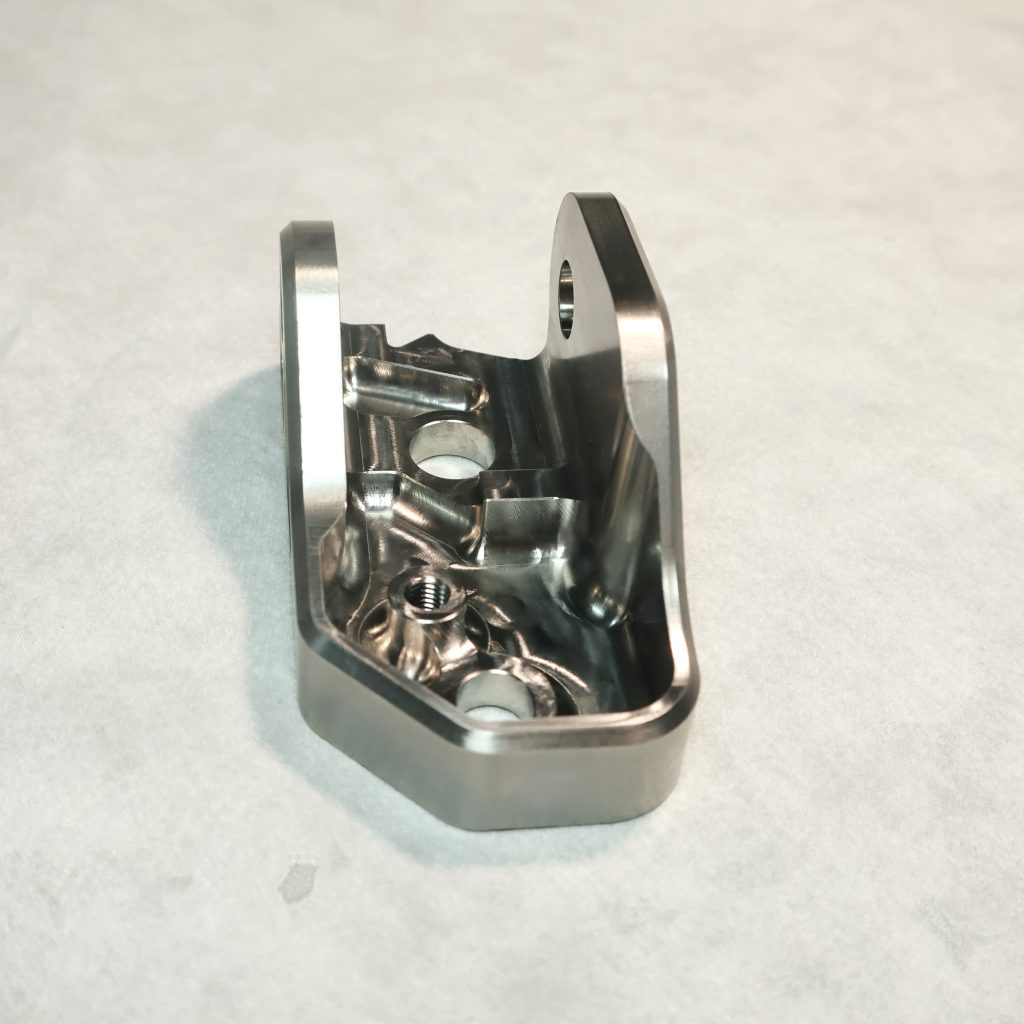
Many people are first attracted to TC4 because of its unique combination of being both lightweight and extremely strong. However, once they enter the manufacturing field, they are often amazed by how difficult it is to machine. In many ways, TC4 is not only a high-performance premium material, but also an engineering material that places extremely high demands on manufacturing capability.
So, what exactly is TC4? Why has it maintained such an important position in high-end manufacturing for so long? And why is it often referred to by machining engineers as a “tool killer”? In this article, we will take a comprehensive look at TC4 titanium alloy.
1. What is TC4?
So, what exactly is TC4? Why has it maintained such an important position in high-end manufacturing for so long? And why is it often referred to by machining engineers as a “tool killer”? In this article, we will take a comprehensive look at TC4 titanium alloy.
TC4 is a typical:
Alpha-Beta Titanium Alloy, also known as an α+β dual-phase titanium alloy.
This means that its internal microstructure contains both α phase and β phase structures simultaneously.
In simple terms:
- The α phase provides stability and heat resistance.
- The β phase provides ductility and toughne
This is also one of the key reasons why Ti-6Al-4V has become a core material in the aerospace industry.
2. Why Is TC4 So Popular?
The biggest characteristic of TC4 is:
“Extremely high strength combined with very low weight.”
Its density is approximately:
4.43 g/cm³.
Compared with ordinary steel, which has a density of about 7.8 g/cm³, TC4 is nearly 40% lighter.
However, its tensile strength can reach:
900–1100 MPa, which is close to — or even exceeds — many high-strength steels.
This means that TC4 possesses an exceptionally high:
specific strength (strength-to-weight ratio).
Specific strength refers to:
the amount of strength a material can provide per unit of weight.
This property is extremely important in the aerospace industry. Because for aircraft:
- The lighter the weight, the lower the fuel consumption
- The lighter the structure, the higher the payload capacity
- The lighter the aircraft, the better the flight efficiency
As a result, Ti-6Al-4V became an irreplaceable material in the aerospace industry at a very early stage.
In addition to the aerospace industry, the motorsport industry also makes extensive use of TC4.
For racing vehicles, reducing weight often means:
- Better acceleration
- Improved handling performance
- Lower energy loss
3. Why Does TC4 Have Such Strong Corrosion Resistance?
TC4 has excellent corrosion resistance mainly because its surface naturally forms a very stable titanium dioxide (TiO₂) protective film. This oxide layer is extremely dense, chemically stable, and has a self-healing ability—meaning that even if the surface is scratched or damaged, it can quickly regenerate and restore protection. As a result, TC4 performs exceptionally well in harsh environments such as seawater, salt spray, chloride-rich conditions, and acidic or alkaline media. Compared with ordinary steel that easily rusts, Ti-6Al-4V shows outstanding stability in marine environments, which is why it is widely used in marine engineering, ship systems, chemical equipment, and deep-sea applications.
4. TC4’s High-Temperature and Fatigue Performance
In addition to its lightweight nature and corrosion resistance, TC4 also performs exceptionally well in high-temperature environments.
Under normal conditions, it can operate continuously at temperatures of approximately 300°C to 400°C without rapidly softening like ordinary aluminum alloys.
As a result, many aerospace engine peripheral structures, high-temperature fasteners, and hot-end structural components are manufactured using Ti-6Al-4V.
In addition to its lightweight nature and corrosion resistance, TC4 also performs exceptionally well in high-temperature environments.
5. Why Is TC4 Considered a Difficult-to-Machine Material?
Although TC4 has outstanding overall performance, it is also well known in the manufacturing industry by another nickname: “tool killer.”
Many engineers notice during their first experience machining TC4 that tool wear occurs far faster than when machining ordinary materials. This is because Ti-6Al-4V has several typical machining challenges.
First, it has relatively poor thermal conductivity. During cutting, the generated heat cannot dissipate quickly, causing a large amount of heat to concentrate at the tool tip area. As a result, the cutting tool temperature rises rapidly, leading to severe tool wear.
Secondly, TC4 becomes highly chemically reactive at elevated temperatures and tends to bond with the cutting tool, resulting in what is commonly known as built-up edge (BUE).
“Built-up edge” (BUE) can lead to poor surface finish, dimensional instability, and a rapid reduction in tool life. In addition, TC4 has a relatively low elastic modulus, which makes the material prone to elastic springback during machining. During cutting, the material tends to be pushed away by the cutting tool, and once the tool passes, it rebounds back to its original position. This behavior further results in rough surface quality, poor dimensional accuracy, and accelerated tool wear, significantly shortening tool life.
TC4 (Ti-6Al-4V) is a high-end titanium alloy material with exceptionally balanced overall performance. It combines high strength, lightweight characteristics, excellent corrosion resistance, high-temperature resistance, outstanding fatigue performance, and good biocompatibility, which is why it is widely used in aerospace, medical devices, motorsport engineering, marine engineering, and high-end precision manufacturing. Although TC4 is difficult to machine and has relatively high manufacturing costs, its superior comprehensive properties still make it one of the most important engineering materials in modern industry. More than just a high-performance alloy, TC4 also represents the advancement of modern manufacturing technology and industrial capability.